

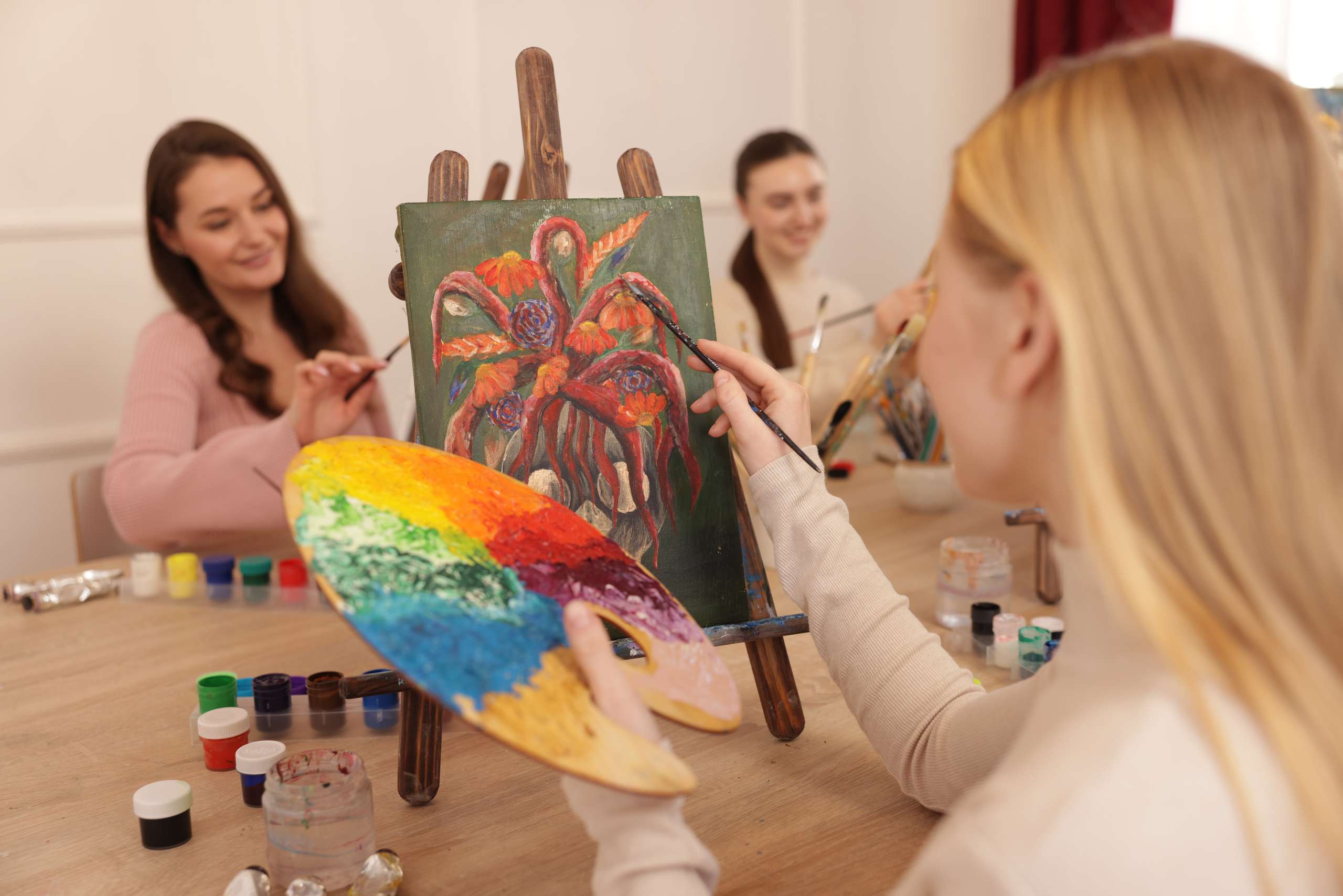
Small studies are just that. Small. And they help you to isolate one problem at a time. A large canvas can be overwhelming. Not just to start, but also to keep going. You will need to deal with so many issues at once. What is the value structure? What is the color harmony like? Are the proportions correct? What about the edges? Where is my light source? What medium should I use? Small studies help you to deal with just one issue at a time. Maybe you want to work on your color harmony. So you do a small study on color. Maybe you want to work on edges. So you do a small study on edges. You can do this in a large painting, but it’s just not as effective as doing a small study. In a large painting you can’t just focus on the color. You will have to think about the drawing, value structure, edges and proportions all at the same time.
Small studies help you to avoid frustration. A small study, even when you screw it up (and you probably will), isn’t that big of a deal. You are not committed to the painting and you don’t have a lot invested. So if you make a mistake, it isn’t that big of a deal. But a large painting is a different story. You have a lot invested and you feel committed to the piece. So when you mess up, it can be very frustrating. I know that I personally get very frustrated when I mess up on a large painting. But if I’m doing a small study, it’s not that big of a deal. So it helps me to avoid frustration.
It’s easy to get tight when you are working on a large painting. You feel committed to the piece and you don’t want to mess it up. But with a small study, you can just let loose and have fun. I mean, it’s not that big of a deal if you mess up. So you can just loosen up and play. And this will actually help you loosen up when you are working on a large painting.
I know that it sounds crazy, but hear me out. When you do a small study, you are forced to edit. You can only fit so much information into a small painting. So you will be forced to edit and only put in the information that is necessary. This will help you paint more efficiently because you will learn what is important and what is not. And it will also help you prioritize. In a large painting you can get caught up in the details. But in a small study you are forced to prioritize and only paint the most important things.
Small studies will help you learn to paint, faster. It’s simple. The more you paint, the faster you will learn. And with small studies, you can paint more often. You can do multiple small studies in the same amount of time it takes to do one large painting. And the more you paint, the faster you will learn. So how do you do a small study?
So now that you know why you should do small studies, I want to show you how. Here are the steps: Choose your subject and set it up. I like to choose a simple still life with one or two objects. Choose a single light source. I like to use natural light, but you can also use artificial. Use a limited palette. I like to use a warm and cool of each primary color, along with white. But you can use whatever palette you like. Do a small compositional sketch. I like to do a small thumbnail sketch. It should be no larger than a few inches. I just do a quick gesture drawing with a brush to get the basic composition. Then I look at the basic value structure.
I squint my eyes and look at the setup to see where my lights and darks are. Then I mix up my big shapes and block them in. I don’t worry too much about the details. I just block in the big shapes and make sure everything is proportioned correctly. Then I look at my edges. I want to make sure I have a variety of edges in the painting. Then I refine the painting. I start adding in the details and refining the painting. Finally I stand back and evaluate the painting. I want to make sure it’s working and make any final adjustments.